|
CATCH AND RELEASEBe a Sport
The Case for Catch and ReleaseA barbed hook resists more force and takes more effort to set than a barbless hook. Therefore, crimping the barb as flat as possible makes penetration into the fish's mouth easier to perform. Scientifically speaking, Sir Isaac Newton's 2nd Law of Motion tells us that force (defined as a push or a pull) is equal to mass (the amount of matter in an object) times acceleration (an increase of speed or velocity) (F=MA). In this case, the force is the pull on the line and tippet; the mass is the barbless hook; and the acceleration is the speed necessary to set the hook. Catch and release makes sense for both the fly fisher and the fish. The angler will hook more fish using the C & R method and will land just as many if he learns to keep the line tight and properly "play the fish". The fish is released with minimal harm to its mouth as the barbless hook is much easier to remove. Just back the hook out (sort of a reverse motion). This can be done while the fish is still in the water.
Everyone goes home happy. Don't forget to smile for the camera.
The DO's
The DON'TsCatch and Release HistoryFirst used by the British about a century ago, the catching and releasing of native fish was developed to stop the loss of fish habitats. Too many animal species were going extinct and something needed to be done quickly. Consequently, preservation of the species became the paramount objective to British conservationists. Anglers in the United States began the practice in Michigan around 1952. So-called "No Kill" zones were set up around the state to preserve their fish populations. It wasn't long before Australia, New Zealand, Canada, Ireland, and many other countries followed suit. Today, most American states have laws protecting inland and ocean species from those who would cause their eradication given the chance. Most states extend those protections even further by placing quotas, size and weight limits, or seasonal constraints on anglers. For example, if you fish the "Dream Stream" and adjacent Spinney Mountain Reservoir in central Colorado as I did last year, the rules are:
THESE RULES ARE EFFECTIVE AND KEEP OUR FISHERIES HEALTHY.
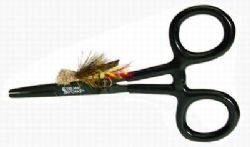
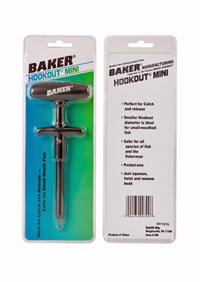
EquipmentEquipping a fly fisherman for proper catch and release practice is not difficult. Mainly one needs to bring to the playing field:  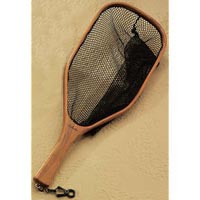  or or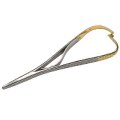 or or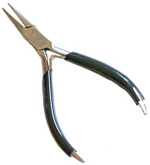 and and If you can't find barbless hooks you should carry a hemostat/forceps combination to crimp down and flatten you barbs and easily remove the hook from the fish. P.S. Another very important piece of equipment is your lips. You may wish to wet your lips and give your fish a bye-bye kiss (see home page) as you will not be taking you newly acquainted friend home with you. CPRPerform fish CPR (cardio-pulmonary resuscitation) when, despite taking all possible steps to prevent it, the fish begins to turn over on its back and appears likely to die. How? No mouth to mouth is required. Just follow these two simple steps:
Approximately 97% of all fish caught by employing the catch and release method survive to fight another day. Some species have been caught and released as many as 30 times. This high recapture number further reinforces the positive application of C & R. If you fish for food, please consume all that you take. If you fish for sport, thank you for returning your fish to its natural habitat. Make sure to follow the rules in the area your are about to fish. If unsure, check with the Fish and Game Commission or other governing body for a copy of the rules. Research, Research, Research and have fun!!!
Have a Fantastic Fish Story to Tell?Do you have a whopper of a story to tell about the one that got away? How about your most dramatic fish catch ever? Read Other Fantastic Fish StoriesClick below to see contributions from other visitors to this page...
The Catch And Release Of A Real Monster Not rated yet
"THE ONE THAT GOT AWAY"!!!!!!!!!!!!! Not rated yet
Easy caught fish, unpictured Not rated yet
WANT A DISCOUNT COUPON? Just click the " Online Fly Shop" bar and sign up for a free account. You will receive a coupon worth 10% off your next purchase. We take discounting seriously. Return from Catch and Release to Fly Fishing Discounters Home Page
|

 There are sportsmen and there are "meat" fishermen. The "meat" man will use just about anything to catch his "meat" quota. That means he will employ such weapons as casting nets, barbed hooks, shotguns, hand grenades, cherry bombs, etc. This person is in it strictly for the food and not the sport. However, if he follows the laws and rules and eats what he catches he creates no problem.
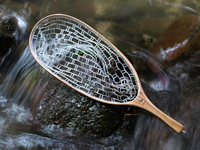
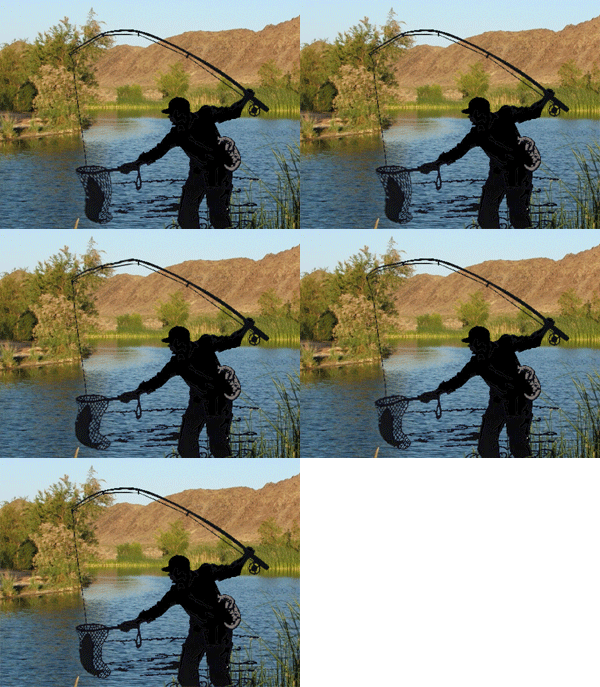
 On the other hand, there is the true sportsman. This type of angler will fish using a barbless hook, a special net, and more peaceful techniques in the pursuit of his intended photographic target. His aim is to